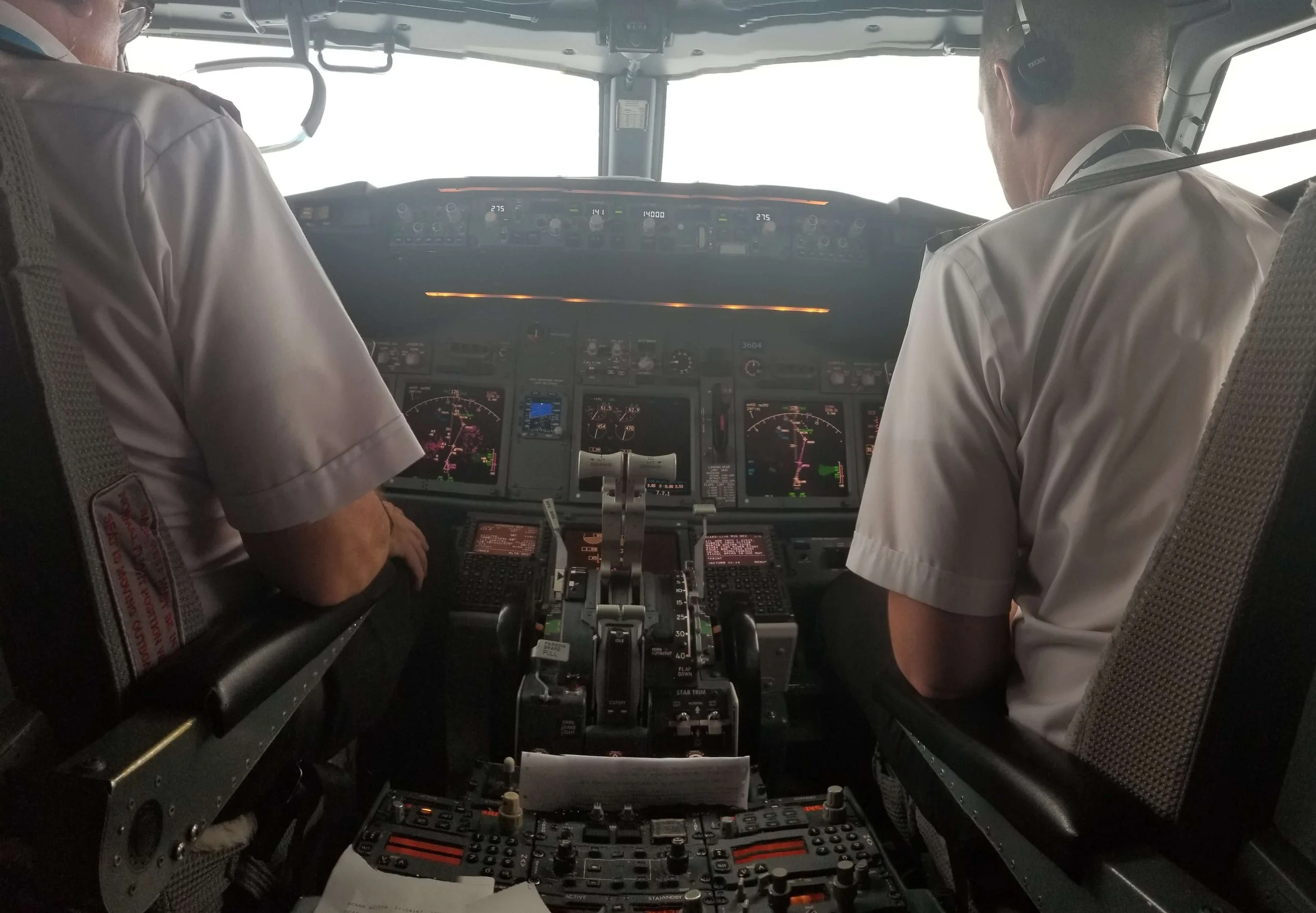
eCabin
Company: Delta Air Lines | Date: June 2018
Creating a custom application for pilots and flight attendants to report maintenance issues while in the air — utilizing Apple’s peer-to-peer technology instead of relying on the plane’s wifi signal.
Role: Lead UX/UI Designer, User Researcher, Project Manager
Technology Used: Sketch, Invision, Apple’s native device subnet
Background
Flight attendants must report any broken items within the aircraft whenever they see them. The process of reporting these ‘cabin discrepancies’ is currently a long and outdated process that results in the flight attendants attempting to shove a folded piece of paper under the flight deck door to the pilots.
This project was to create a tool that would replace the current cabin discrepancy reporting tool to lessen the burden on the flight attendants and pilots.
Defining Our Stakeholders
Goal Statement
This was my first major project where I was leading the effort internally, managing external stakeholders, and creating the plan of action for our small team: one Designer, one Strategist, one Developer.
Using my experience from working at DAL, I knew that the problem we were trying to solve was more complex than any of us, including the stakeholder that initiated the project with The Hangar. I planned and ran a workshop with representative stakeholders from TechOps, IT, FlightOps, and In-Flight Services to hear about the challenge they were encountering.
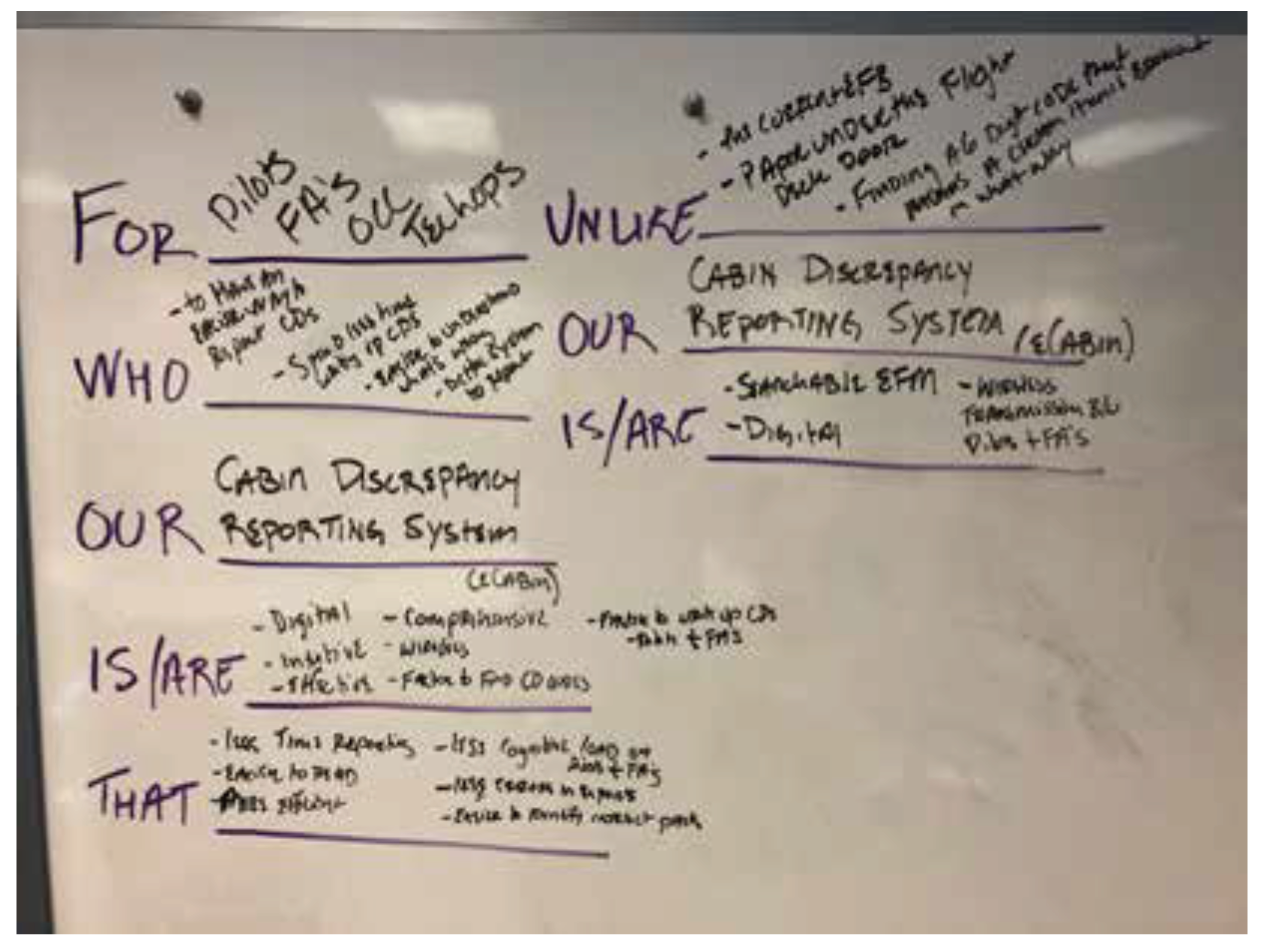
In addition to other design and project kick-off activities, we ran an activity for all of us to collaboratively create a goal statement.
During this process, we learned that we were actually missing a stakeholder that was a key part of the process -- the Operation and Customer Center (OCC).
FOR Crew (Pilots and Flight Attendants), TechOps (Line Maintenance), and OCC WHO need to be able to report cabin discrepancies with greater ease and efficiency OUR Cabin Discrepancy Reporting system (eCabin) IS a digital tool that is more intuitive for flight attendants and pilots to use THAT decreases time to write a report, decreases time to enter the report into ACARS, and decreases errors in item reporting.
UNLIKE the current way to report cabin discrepancies (which involves consulting a large binder of numbers to determine the correct 6 digit number for the item and how it is broken, writing a paper report, and then shoving that paper report under the flight deck door OUR Cabin Discrepancy Reporting System (eCabin) (IS/ARE) creates a new experience for the flight attendants to submit cabin discrepancy reports by digitizing the EFB, allowing it to be searched by term, and creating the ability to wirelessly send the report to the pilots.
Design Research
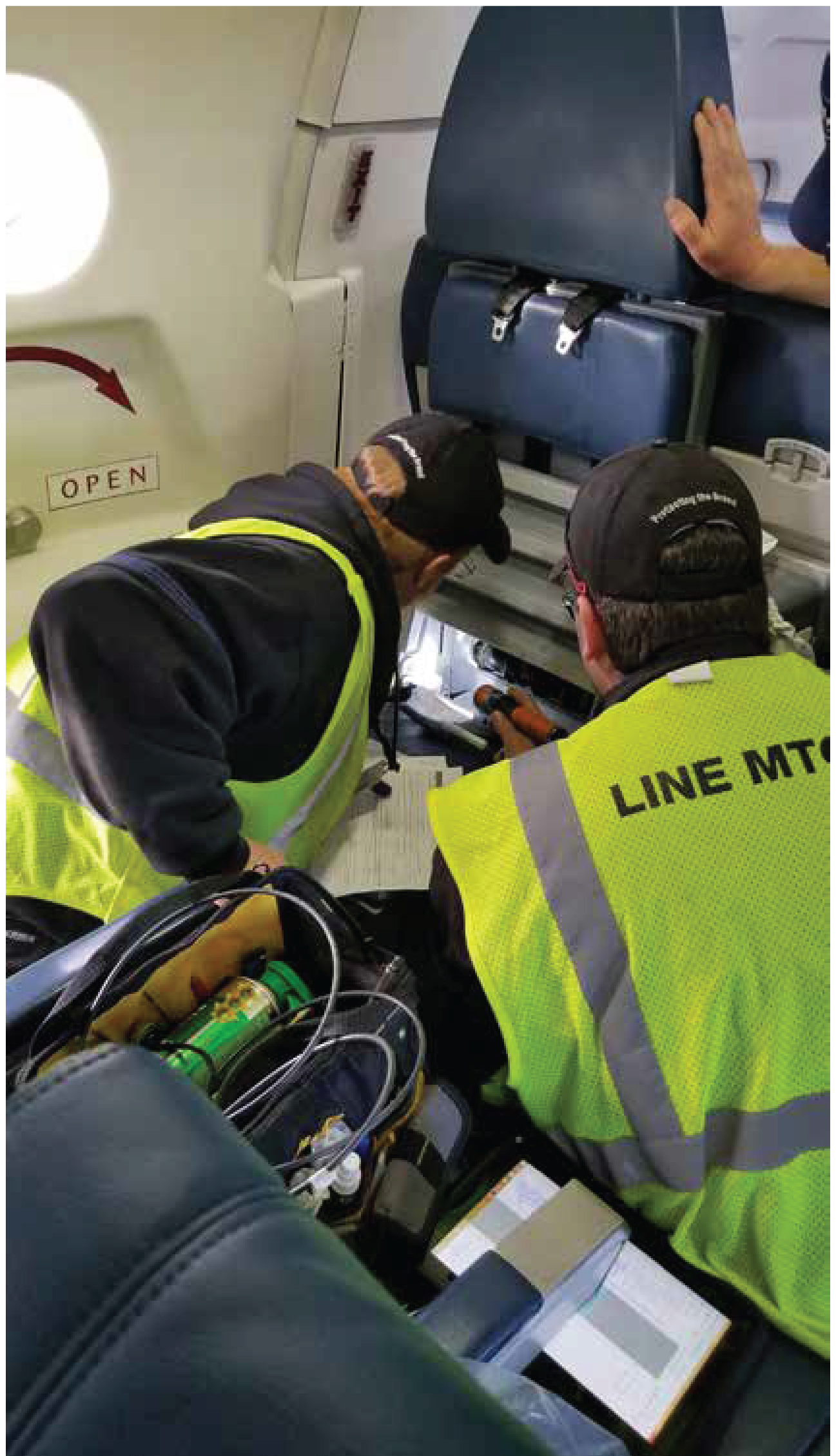
After our workshop with all relevant stakeholders, our small team ventured into the field to learn and observe all steps of the Cabin Maintenance process. From the initial discovery of the broken item, all the way to the item being repaired by Line Maintenance or Cabin Maintenance.
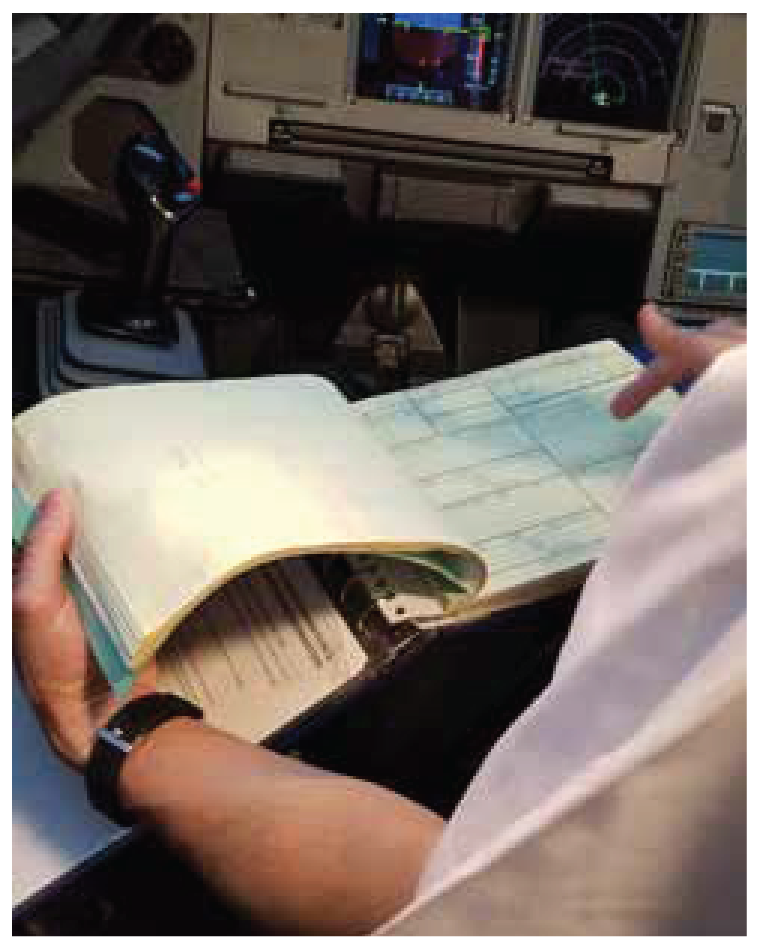
We were able to map out the whole process from start to finish
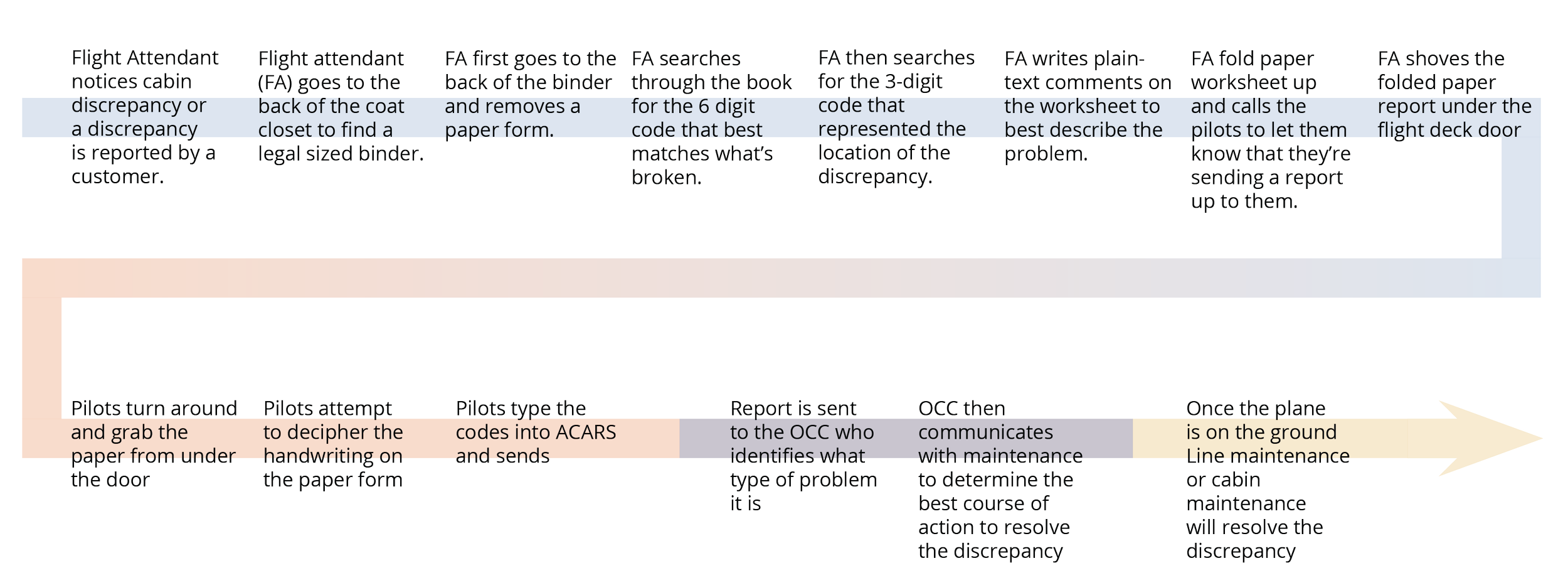
We identified that the most time lost during the process was around the flight attendants attempting to find the proper codes out of the large physical binder and then passing that information (through the flight deck door) to the pilots.
We validated our stakeholder’s original idea and ask, as well as learning much more about how we can digitize the process.
Final Designs
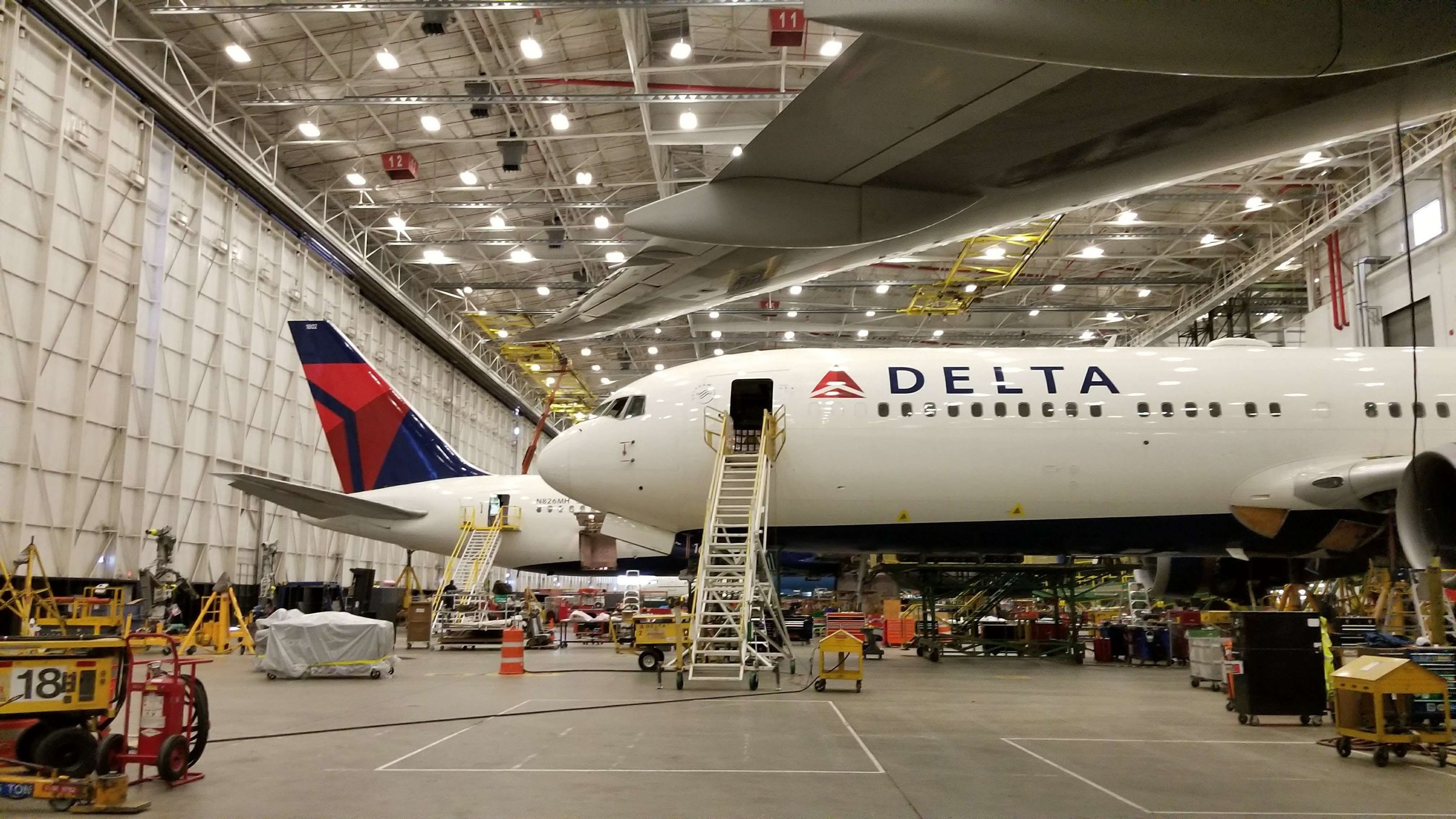
The pilots have company issued iPads and the Flight attendants have company issued iPhones. We created one application that changed modes depending on which device was used.
I started out with some basic sketch designs on a whiteboard, and then moved into Sketch.
App Flow
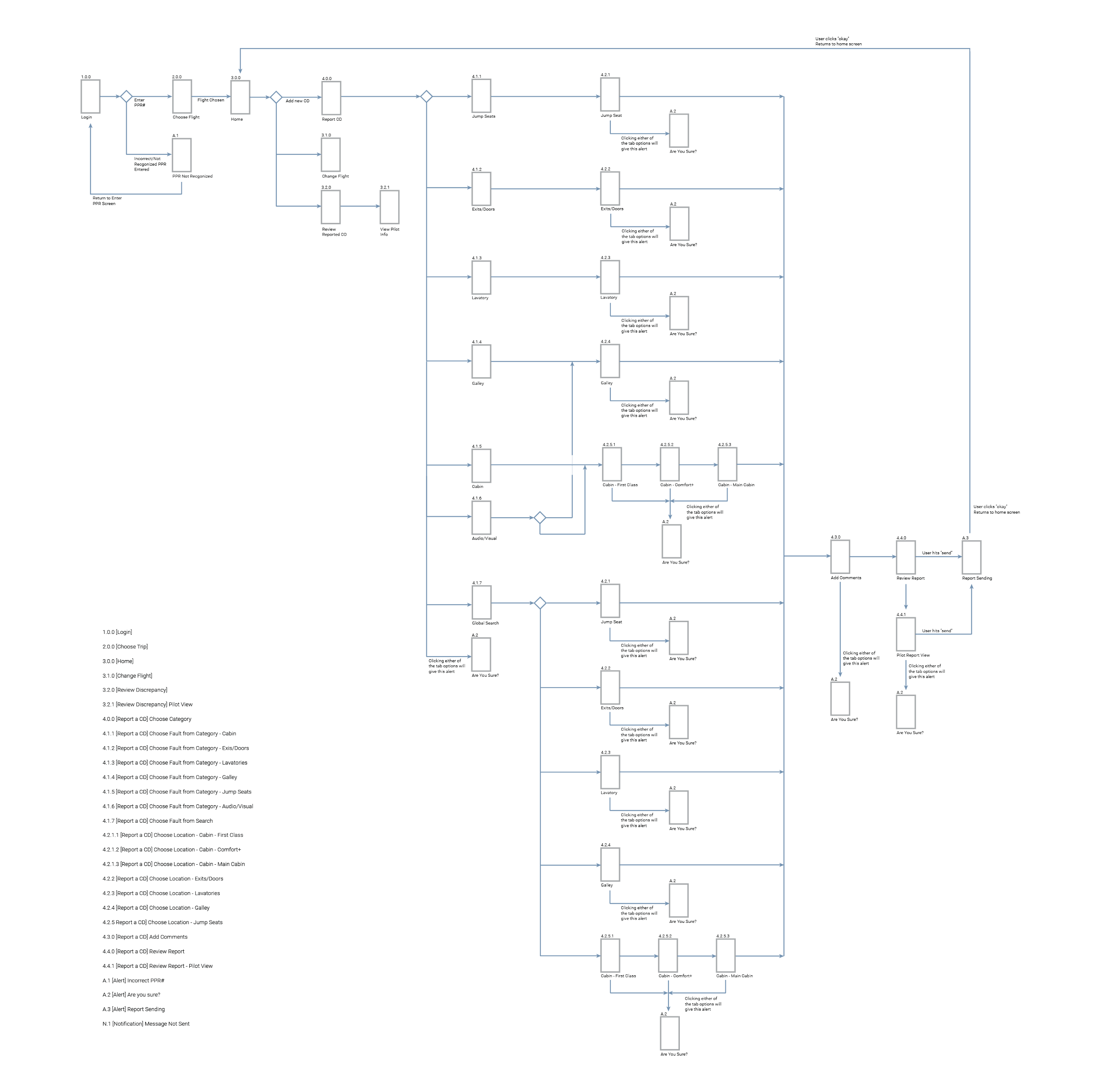
To make sure I had all of the potential screens I needed to complete the experience, I mapped out what the user flow would be for both the Flight Attendant user and the Pilot User.
On the left is the representation of the Flight Attendant App flow.
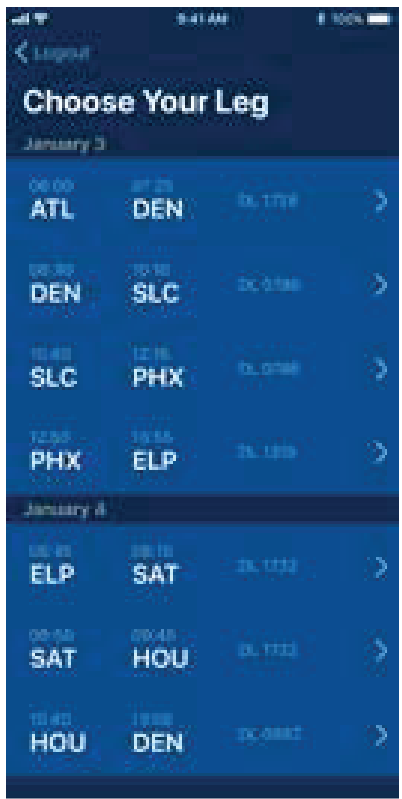
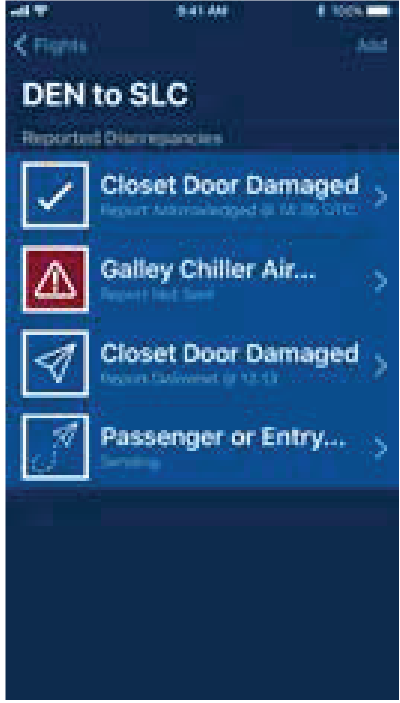
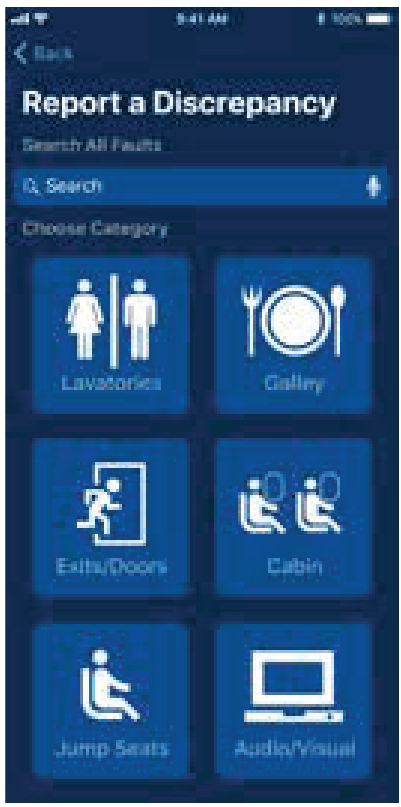
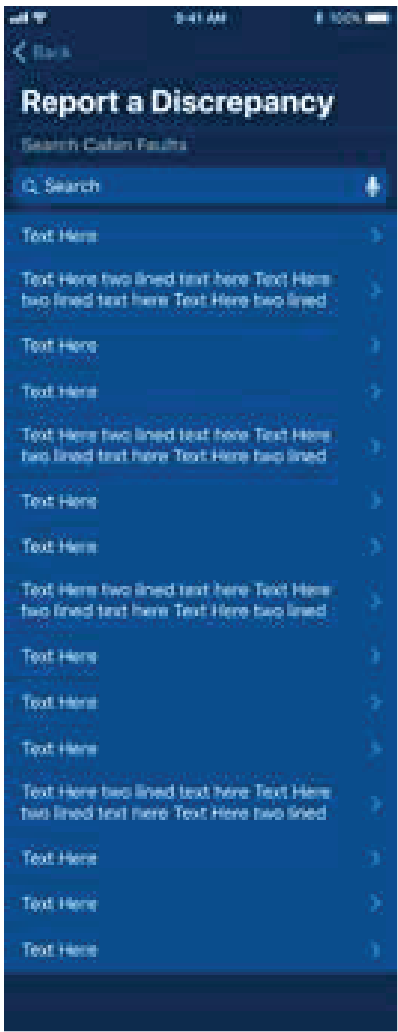
Flight Attendant Application
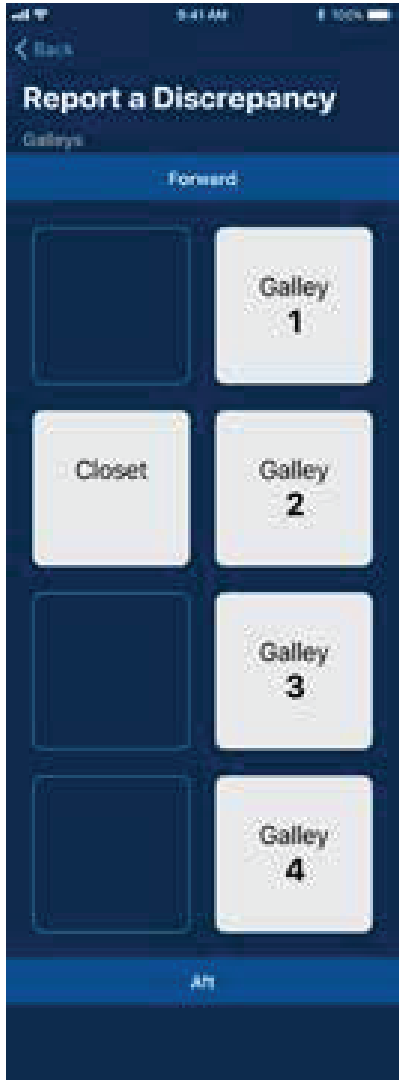
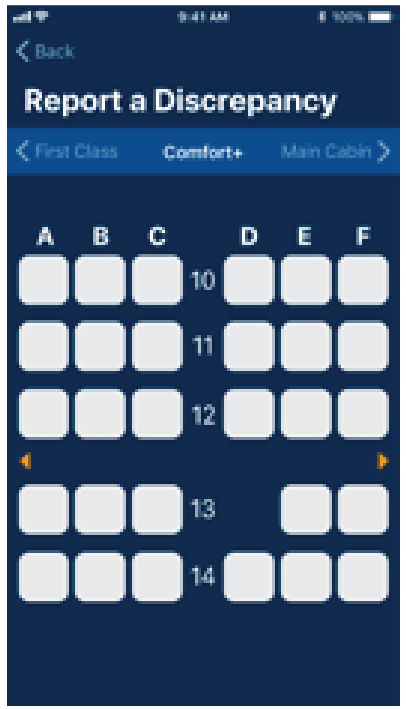
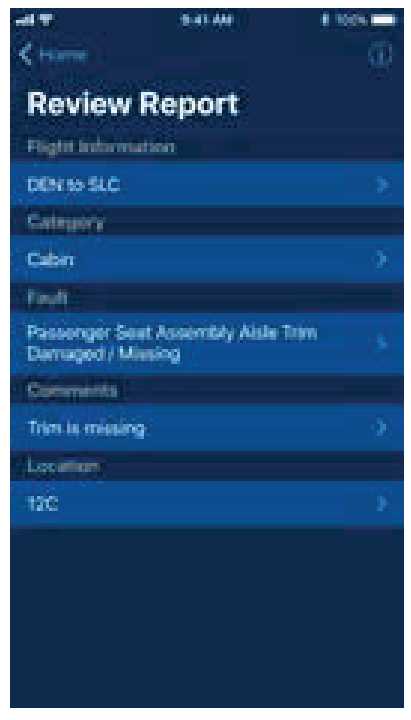
We didn’t have any type of branding or style guide to go off of for this internal application, so we utilized Delta Air Lines brand colors. I designed the app in a Dark mode format because the majority of the time while the flight attendants are in the air, the lights are off in the cabin.
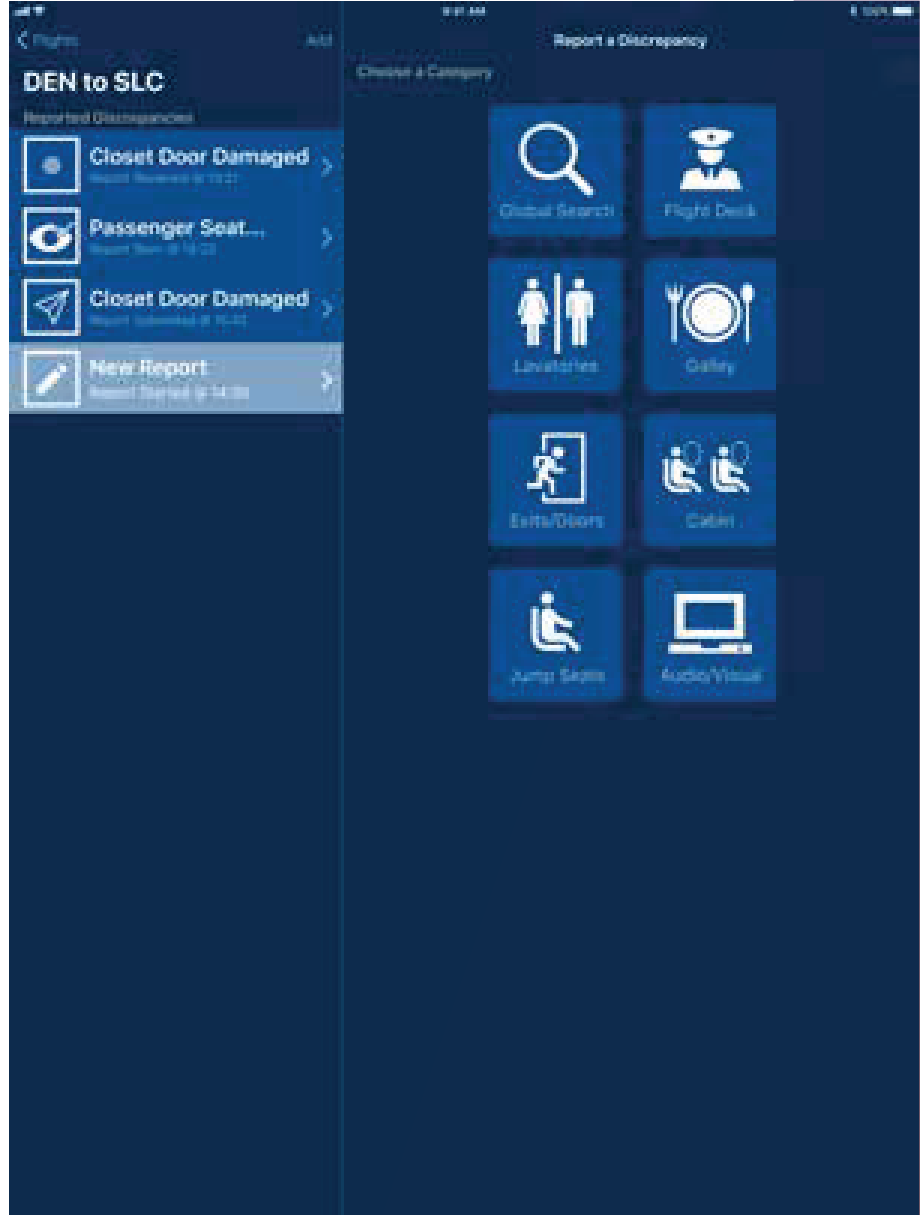
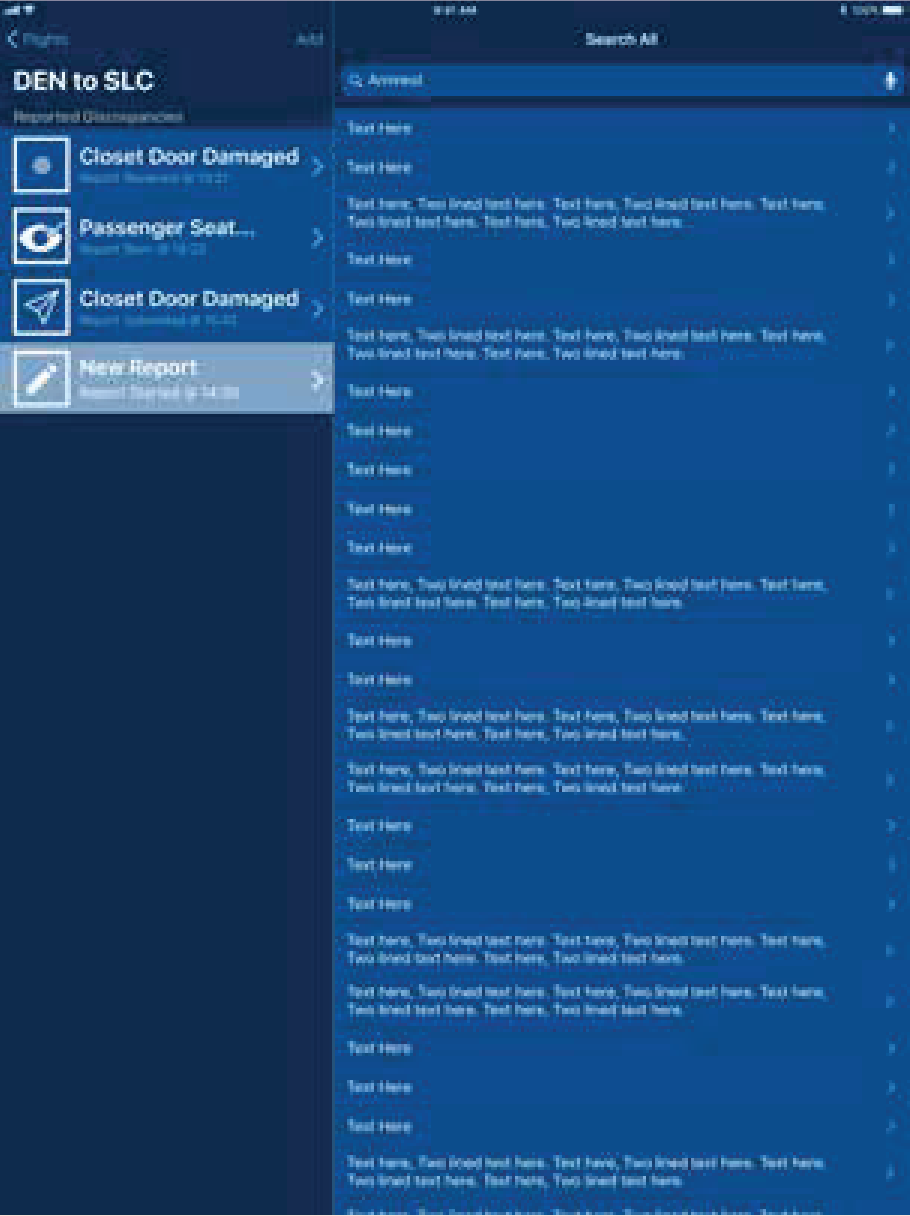
We created the application so that the app visualized the locations within the aircraft, for each aircraft type and configuration, such that the flight attendants didn’t have to memorize that on their own. We also created a database for all of the cabin discrepancy codes so that flight attendants could key-word search for discrepancies, rather than trying to search alphabetically by the first word in the description.
Pilot Application
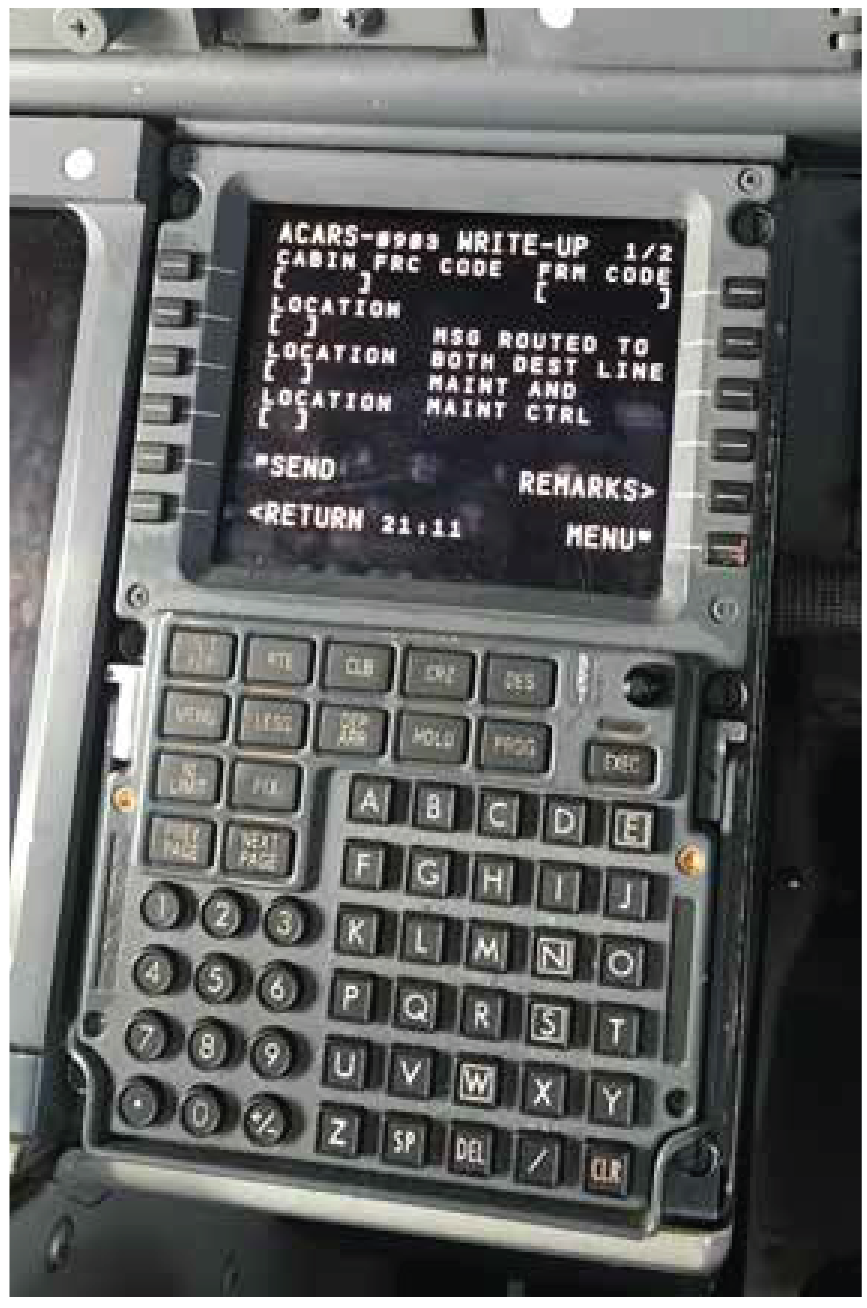
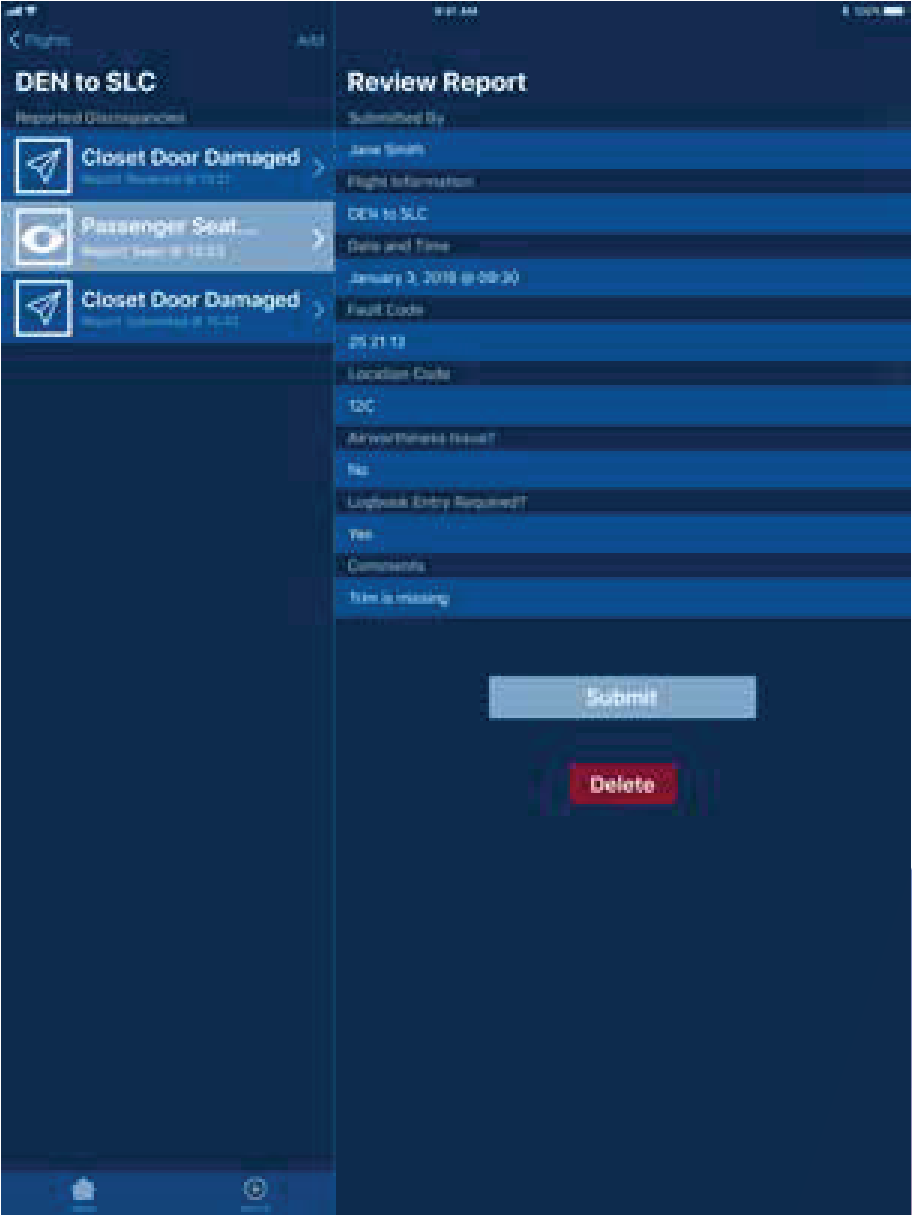
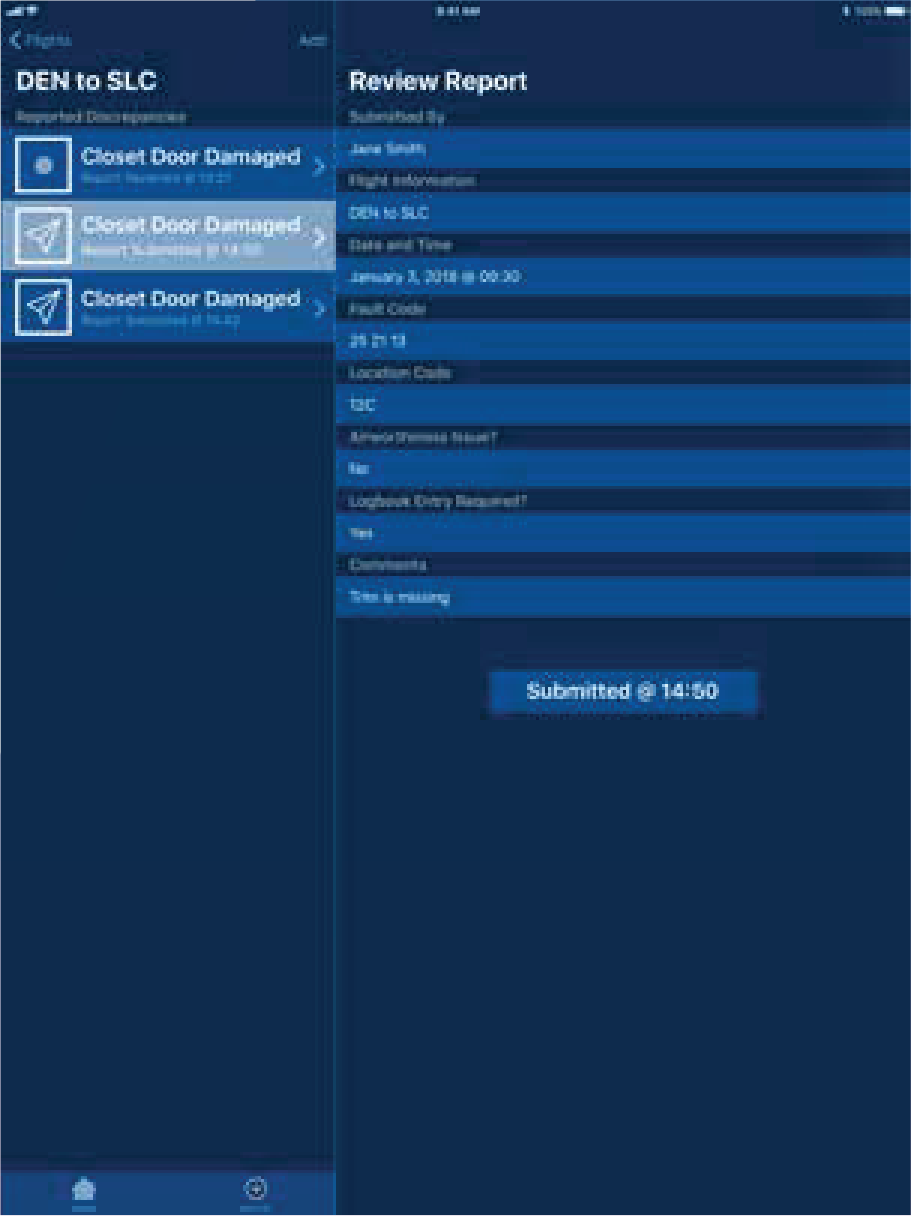
We designed the app in such a way, so that the device type is used to identify the type of user, rather than hard-coding it into the application itself — since only the pilots use iPads and only the flight attendants use iPhones. This side of the app allows the pilots to quickly review the cabin discrepancy reports and pass them along to Maintenance. Rather than the current way where they have to painstakingly type in the report by hand into the small on-board computer (ACARS).
Testing
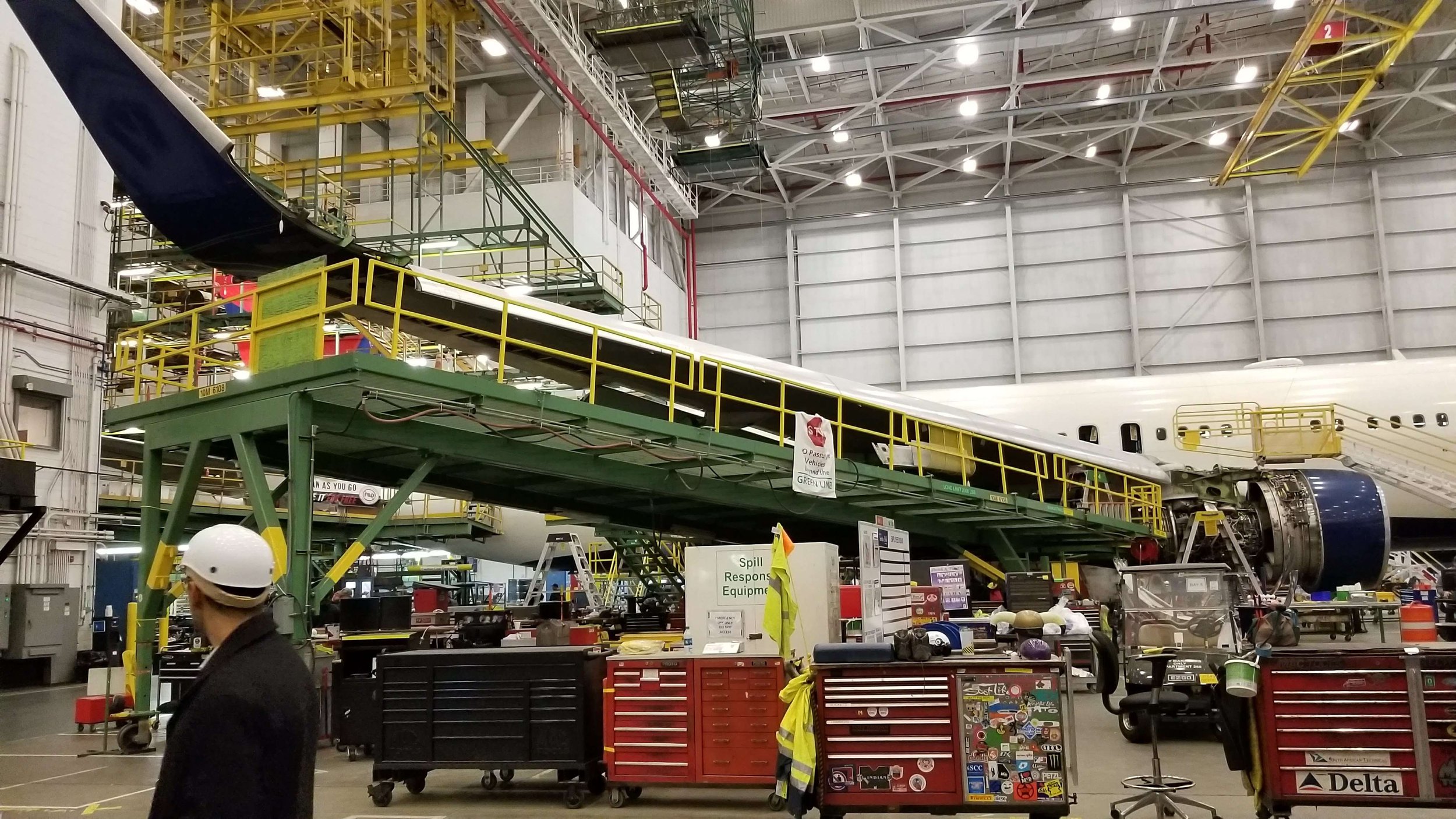
One of the biggest questions we had throughout this process, is would the flight attendant’s iPhones and pilot’s iPads be able to communicate while in the air, through all interference from the many instruments on board, and through the armored flight deck door. Once our MVP was created, we went to Cabin Maintenance and tested the efficacy and range of the system.
Our system, which utilized Apple’s native subnet feature plus the router on-board the aircraft, allowed us to send messages back and forth quickly between all of the flight attendant devices and the pilot devices. Even on larger planes, the system was able to use the flight attendant devices as additional broadcasting points to be able to chain communication between flight attendants even on larger airplanes such as the Airbus a330.
Outcome
By simplifying the process of identifying and locating a cabin discrepancy and enabling the flight attendants & pilots to send those reports digitally, we cut down the time to write a single report by 90% (from 10 minutes down to around 1 minute.)
After presenting our finalized design and experience to the leaders of FlightOps, TechOps, In-Flight Services, and IT, we transferred this project into the larger organization to be put into production.
Delta Air Lines used this MVP that our team created in two months in negotiations with another flight application company that had a similar system. Because of the work we did, they implemented parts of our design as well as saving Delta Air Lines around $2 million in that deal alone.